Make a Small Travel Budget Before You Leave
A practical way to list likely trip costs, set personal limits and leave room for surprises—without letting a budget dictate every choice.
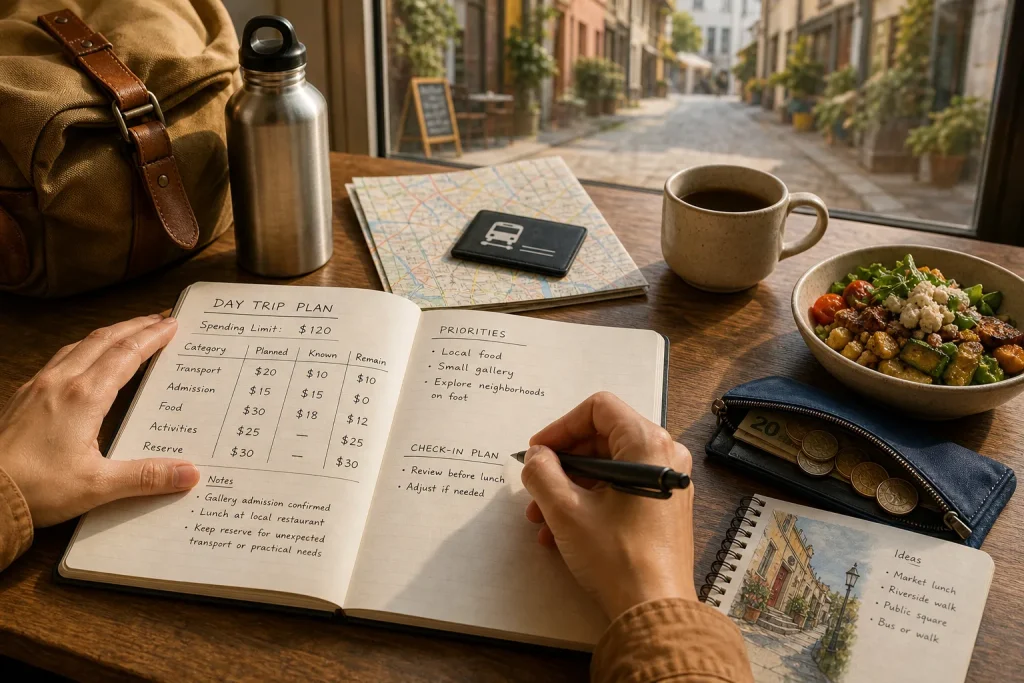
A modest travel budget can make a trip feel more open, not less. The point is not to predict every purchase or turn a day away into bookkeeping. It is to decide what matters before you leave, notice the costs that can quietly accumulate, and protect enough flexibility for an unexpected need. A useful budget reflects the trip you actually want: perhaps a local meal, a museum visit, or time spent getting to know a neighborhood on foot.
Start with the decisions you control. Write down the trip’s length, the activities you care about, and any firm limit on what you can spend. Then separate known costs from choices you can make along the way. This gives you a clear reference for evaluating the finished plan—and for adjusting it calmly if circumstances change.
Begin with a personal spending boundary
Choose a total amount that feels responsible for your circumstances, rather than borrowing a figure from someone else’s itinerary. Consider what must remain available for ordinary commitments at home, and do not treat money you cannot readily access as travel spending. A useful boundary is one you can keep without relying on perfect weather, a packed schedule, or skipping essentials.
Next, decide what the trip should make room for. You might value a regional bus ride, a meal made with local ingredients, or a visit to a small cultural site. Naming these priorities helps distinguish meaningful spending from purchases that simply appear because you are away. If the boundary and priorities do not fit together, simplify the trip before departure instead of assuming you will somehow make the numbers work later.
List the costs that shape the trip
Make a plain list of likely expenses, grouped in a way that matches your plans. Include getting to the destination, local transport, lodging if needed, food, admission or activity fees, and practical items such as a transit card or a weather-appropriate layer. Check current details with the relevant provider when a cost depends on a schedule, booking rule, or route. Do not confuse an estimate with a confirmed charge.
Separate fixed or already-known costs from flexible choices. A booked ticket may be difficult to change, while a café meal might be replaced by a market lunch. Note what is included in any reservation and what is not; a room, for instance, may not cover breakfast or local transport. This simple distinction shows where you have room to adapt and where you should avoid committing casually.
Set limits that guide choices
Rather than assigning every unit of money in advance, give the main categories personal boundaries. Decide what you are comfortable spending on food, transport, and activities, while keeping your overall limit visible. These boundaries should help you make decisions, not shame you for changing them. If an activity matters greatly, you can deliberately allow more room for it by choosing a simpler option elsewhere.
Use a short check-in at a natural pause, such as before leaving lodging or after returning from an outing. Compare what remains with the plans still ahead. If transport is taking more than expected, consider a walkable cluster of sights; if a free public event has become the highlight, you may choose to spend more on a meal you value. The decision is yours, but make the tradeoff explicit rather than letting small purchases decide for you.
Keep a reserve for unplanned needs
Leave part of your personal limit unassigned. This reserve can help with a changed route, an essential replacement, or a practical need that is hard to predict. It is not an invitation to spend the entire amount. Treat it as protected flexibility, and distinguish it from money set aside for emergencies at home or costs that you cannot responsibly absorb.
Choose where the reserve will sit and how you will track it. You might keep a note on your phone, use a separate cash envelope, or mark a line in a notebook. Avoid carrying more cash than feels appropriate for your situation, and keep payment options secure. If the reserve starts shrinking, pause before optional purchases and review the remaining commitments. For serious disruption or financial concerns, seek suitable professional or official guidance rather than relying on a travel budget alone.
Make the budget usable while travelling
A budget only helps if you can consult it without interrupting the experience. Keep the list brief: category, planned boundary, known commitments, and what remains. Record purchases in broad categories instead of documenting every detail. If several people are travelling together, agree beforehand how shared costs will be handled and how each person can raise a concern without awkwardness.
Build in choices that preserve the spirit of the trip. Carry a refillable bottle where appropriate, look for public spaces that invite a pause, and compare transport options based on convenience as well as cost. These are not universal ways to save: access, comfort, local rules, and individual needs matter. The useful question is whether a choice supports the experience you want while respecting your personal limit.
Review the finished budget before departure
Read the list from start to finish and check each item against the actual itinerary. Ask whether a cost is confirmed, estimated, optional, or still unknown. Look for missing links, such as transport between a station and lodging, and for double-counted items, such as a meal already included with a booking. Then compare the likely total with your boundary and confirm that the reserve remains available.
Make the final decision before leaving: keep the plan, simplify it, or postpone a commitment that does not fit. A finished budget is not a prediction of every moment; it is a clear set of choices and a way to respond when plans shift. If the trip remains comfortable on paper only when you ignore an essential expense, revise it. That is useful information, not a failure.
Hypothetical worked example
Imagine a traveller planning a day in a nearby town with a firm personal spending limit. They already know the round-trip fare, want to visit a small gallery, and would like a sit-down lunch. Their constraints are simple: the fare is fixed, the gallery has an admission charge to confirm, and they want to retain money for an unexpected local journey or practical need. They list transport, admission, food, and a separate unassigned reserve, leaving optional shopping off the plan.
Before departure, they confirm the gallery’s current entry details, compare them with the remaining boundary, and choose a modest lunch option that still feels enjoyable. They keep the reserve separate and make a note of each broad-category purchase. If rain makes walking between places impractical, they can use the reserve for local transport and skip a nonessential purchase. The expected result is a clear tradeoff: the visit and meal remain priorities, while the day can adapt without treating every unplanned cost as a crisis.
Conclusion: Keep the plan clear and humane
A small travel budget works best as a tool for attention. It helps you see which costs are fixed, which choices matter, and what flexibility you have left. Make the limits personal, check uncertain details, and keep a reserve for needs that cannot be scheduled. Then carry a version of the plan you can actually use.
When you return, a brief review can improve your next decision. Notice whether the categories matched the trip, whether the reserve served its purpose, and which spending felt worthwhile. You do not need to turn those observations into rigid rules. Use them to make future travel more considered, with room for both practical limits and the pleasures that made the outing worth taking.