Pack a Picnic That Travels Well
Choose sturdy, shareable foods, pack them to prevent spills and bruising, and leave your outdoor spot as welcoming as you found it.
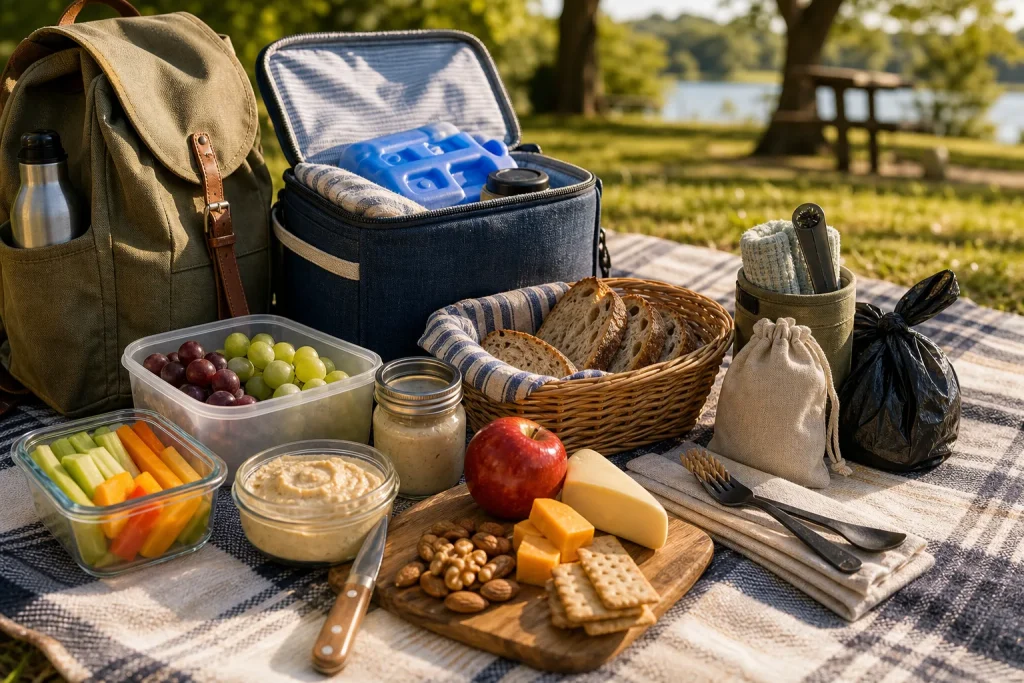
A picnic is easiest to enjoy when the food suits the journey as well as the setting. A short walk to a shaded bench calls for different packing choices than a ride across town followed by time outdoors. Rather than starting with recipes, think through the route, the weather, what people can eat comfortably, and how you will carry everything back. Sturdy foods, sealed containers, and a small cleanup kit can make an ordinary lunch feel relaxed instead of fussy. The aim is not an elaborate spread: it is food that arrives in good shape, can be shared without a full kitchen, and leaves the place ready for its next visitors.
Step One: Picture the Journey Before Choosing Food
Start by tracing the outing from your front door to the place where you expect to eat. Notice whether the food will be carried by hand, tucked into a backpack, or left in a vehicle, and whether you will have a table or only a patch of grass. Movement and posture matter: foods that need a knife, a stable plate, or careful balancing can become awkward when everyone is sitting on the ground. A short list of practical constraints—travel time, shade, available carrying space, and access to drinking water—helps narrow the choices before you shop or pack.
Then consider the people sharing the meal. Ask about dietary needs, strong dislikes, and whether anyone would rather avoid sticky fingers or complicated serving. Choose a mix that can be eaten cold and divided easily, such as whole fruit, bread, cheese or a suitable alternative, and a simple savory item. Keep foods that need special temperature care in an insulated bag with cold packs, and follow the package guidance for storage. If conditions make safe handling uncertain, choose shelf-stable options instead. For food-safety questions involving allergies or medical needs, use qualified professional guidance.
Step Two: Choose Foods That Hold Their Shape
Portable picnic food should tolerate being carried and served outdoors. Favor firm produce that can be rinsed and dried, bread that will not collapse under a light filling, and snacks that do not melt or crumble at the slightest movement. Whole ingredients often travel more neatly than a dish assembled in advance: keep a spread in a small sealed container and the bread separate, for example. This lets people serve themselves while reducing sogginess. Bring only what the group expects to eat, and consider whether scraps, peels, or packaging can be packed out rather than left behind.
Think about texture and sequence as well as durability. A meal with a few contrasting choices—something crisp, something filling, and something fresh—can feel complete without a complicated menu. Avoid foods that drip when tilted or depend on a delicate garnish. If you want a dip, pack it in a leak-resistant container and include a serving utensil; do not rely on a lid as a plate. Keep strong-smelling foods sealed, particularly when sharing a crowded public space. The best choice is the one that fits the day’s conditions and the group’s appetite, not the one that looks most elaborate at home.
Step Three: Pack by Weight, Access, and Mess
Use containers with secure lids, and match the container to the food: rigid boxes protect soft fruit, while a small jar can keep a dressing or dip contained. Place heavier items near the bottom of a bag so they do not crush delicate food. Put anything needed first—napkins, water, or a hand-cleaning option—where it is easy to reach without unpacking the whole picnic. A reusable cloth can wrap a loaf or separate containers, while a washable tote or backpack keeps the load together. Avoid carrying glass where a fall could create a hazard.
Pack cold items together in an insulated carrier with cold packs, separate from dry snacks and personal belongings. Keep ready-to-eat food covered, and use clean hands or utensils when serving. Bring a small waste bag, napkins, and a container for leftovers; a spare bag can hold items that need washing later. If the outing includes a walk, distribute the load so one person is not left with all the heavy containers. A tidy pack is not just convenient: it makes it easier to notice a leak early and to leave the site with every item accounted for.
Step Four: Serve Simply and Keep the Spot Comfortable
Before opening food, check the surface and choose a place that does not block a path, doorway, or seating intended for others. Follow posted rules about picnicking, wildlife, fires, and waste. Set a cloth or reusable mat on a clean, appropriate surface, then keep containers grouped rather than spreading everything across a large area. Invite people to take manageable portions, and use serving utensils for shared foods. If there is no suitable table, favor items people can hold easily; avoid balancing open cups or dishes where they can spill into a walkway.
Keep the meal comfortable for the surroundings. Pack a lid back onto each container after serving, and do not feed wildlife or leave food unattended. If wind is picking up, secure light packaging and keep napkins from blowing away. Watch for drips or crumbs as you eat, dealing with them while they are easy to collect. When the group is finished, check beneath the mat and around nearby seating. The goal is to enjoy the place without claiming more space than needed or leaving evidence of the meal for someone else to manage.
Step Five: Close Up With a Leave-No-Trace Sweep
Before packing, separate reusable items, food that is safe to take home, and waste that needs proper disposal. Seal leftovers promptly and keep them at an appropriate temperature; discard food if its handling has become uncertain rather than taking a risk. Wipe containers only as needed, then place used napkins and wrappers in your waste bag if no suitable bin is available. Check for small items such as bottle caps, fruit stickers, toothpicks, and crumbs. If a bin is full or absent, carry waste away and dispose of it where it is accepted.
Do a final visual sweep from the place where the group sat to the route back out. Shake out a mat only where it will not scatter debris, and return moved furniture or shared equipment to its original position if permitted. Leave natural objects where they belong, and do not pour food scraps or liquids into planting beds or waterways. On returning home, wash reusable containers and cloths, and make a brief note of anything that leaked or proved awkward. That small review helps refine the next packing choice without turning a simple lunch into a complicated project.
A Worked Example: Lunch After a Local Walk
Hypothetical worked example. Imagine two friends planning a walk to a public garden with no promise of a picnic table. They have a small backpack, expect to sit on a bench, and one person avoids nuts. Their starting point is a shared lunch that must stay neat in transit and be easy to eat without plates. They choose firm apples, bread packed separately from a mild cheese alternative, and a sealed container of sliced vegetables. They add water, napkins, a washable cloth, a serving utensil, and a waste bag, while checking ingredient labels for the stated restriction.
They place the heavier food low in the bag, keep any temperature-sensitive item in an insulated carrier with a cold pack, and put napkins near the top. At the garden, they use only the space they need, keep the food covered between servings, and collect scraps and wrappers as they go. If the bench is unsuitable or the outing runs longer than expected, they can eat the shelf-stable fruit and bread and leave the more sensitive item packed until it can be stored safely. The tradeoff is a simpler menu in exchange for easier carrying, fewer spills, and a straightforward cleanup.
A picnic that travels well is built from a few sound decisions: match food to the route, choose items that keep their shape, pack them to protect both food and belongings, and plan for the waste before leaving home. Serve with consideration for other people using the space, then check the ground and seating before you go. These habits make room for local scenery and conversation without demanding special equipment or elaborate preparation. Keep the plan flexible, follow food-storage guidance, and let the place—not the packing—be the memorable part of the meal.